Diving Deep into the QSR Cross-Channel Phygital Loyalty Experience
—
Context
While McDonald's had evaluated their loyalty through several previous projects, the product and design teams lacked visibility into the
in-store (“phygital”) experience during ordering.
Stakeholders wanted to understand how customers engage with loyalty across drive-thru, front counter, and kiosk channels. We created detailed journey maps to surface bright spots, pain points, opportunities, and competitive approaches.
Process
Given diverse stakeholder needs and the need for both high-level and detailed journey maps, I led a stakeholder alignment workshop to define key questions and “must-haves” for each map type.
We then conducted two rounds of ride-along interviews: 18 competitor sessions with high-frequency users (18 total, 60 minutes each) and 15 sessions with medium- and high-frequency McDonald’s loyalty users (75 minutes each). During each interview, participants placed two orders across two of the three channels.
Results
Findings were synthesized into four journey maps and used in a “walk the walls” workshop with 10+ stakeholders to identify opportunities. Stakeholders agreed the maps provide a strong foundation for understanding how loyalty intersects across ordering channels and will guide future projects exploring specific parts of the experience.
My Role
Lead User Researcher & Service Designer
Timeline
Winter 2025 - 2026 | 3 Months
Methods
Journey Mapping
Contextual Inquiry (Ride-Alongs)
Ethnographic Observations
Opportunity Identification Workshop
Stakeholder Alignment Workshop
Current State Analysis
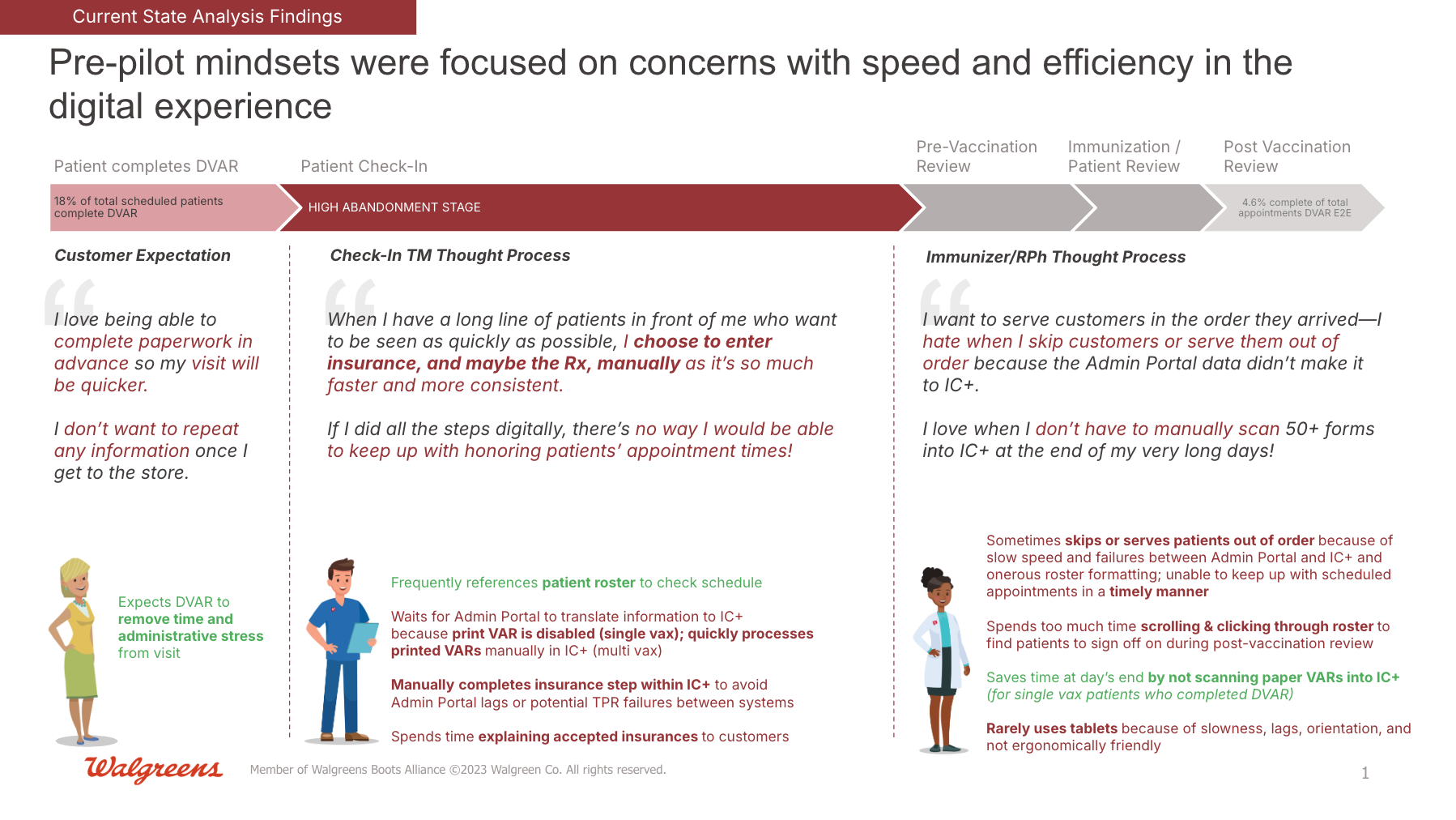
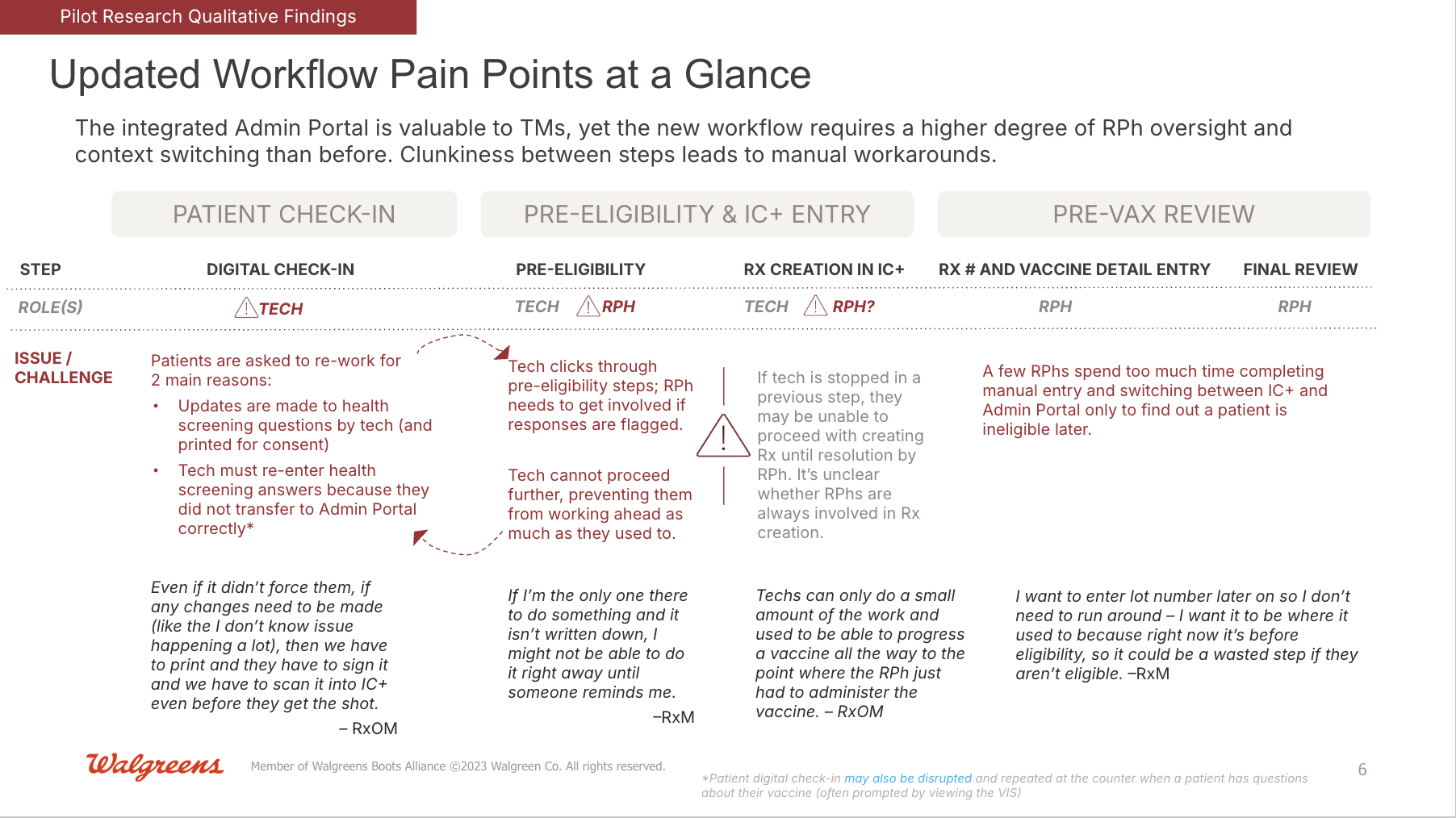
Qualitative interviews with 5 high- and 5 low-adopting digital stores as well as voice of the team member analysis revealed system bugs and lags were the primary driver for low TM adoption. Through this current-state research, we came to understand key sentiments across 3 main groups:
Technicians abandoned the workflow and resorted to a manual process because of technology lags and the pressure of patients standing in front of them in lines.
Pharmacists served patients out of order because of an unclear user interface, and they spent excessive time signing off on patients during the post-vaccination review.
Patients who completed the digital paperwork in advance were disappointed when their visit wasn’t smoother and faster than those who did not do pre-work.
Future State Service Blueprinting
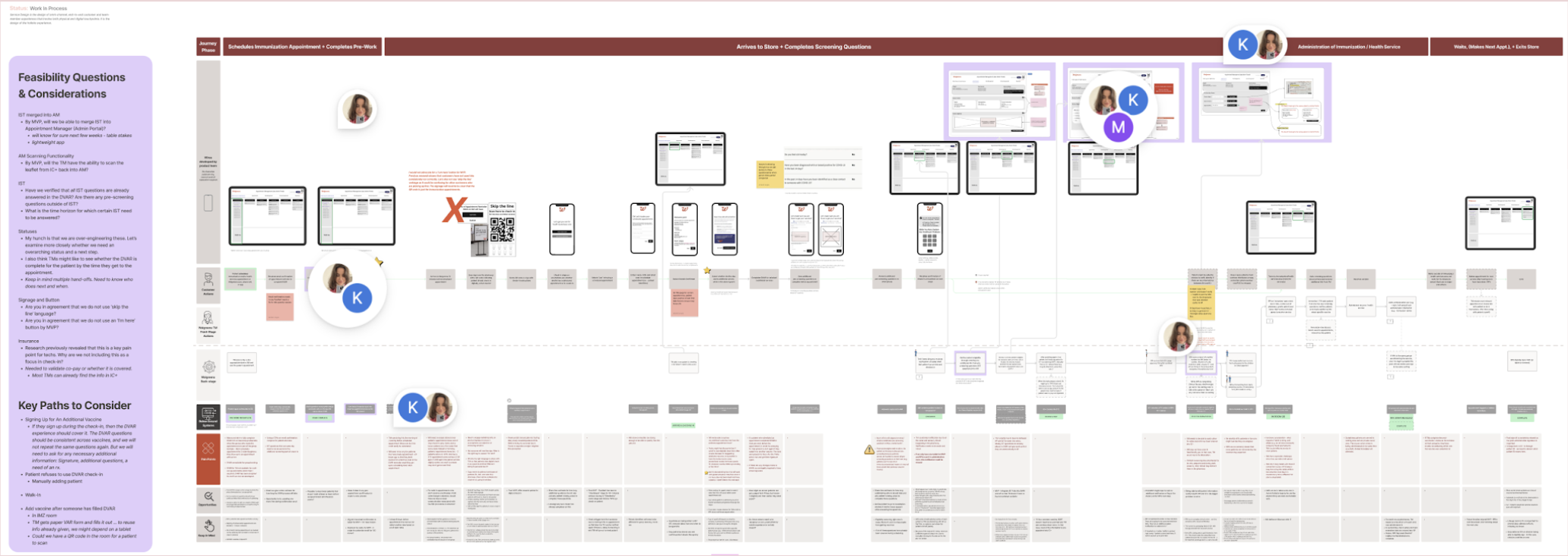
Building on the vision for a check-in and team member queue concept, I mapped seven unique happy and unhappy path blueprints and facilitated “power hour” journey-mapping sessions. These sessions aligned product, design, and operations teams around the patient, technician, and pharmacist journeys, highlighting key pain points to monitor during the pilot. Insights from past research were integrated to inform stakeholders of likely behaviors based on similar prior concepts.
These blueprints not only created a shared understanding of the future state—enabling informed decision-making—but also served as a practical tool for UX designers, providing a holistic view of the team member work queue and guiding prototype development.
Future State Research and Pilots
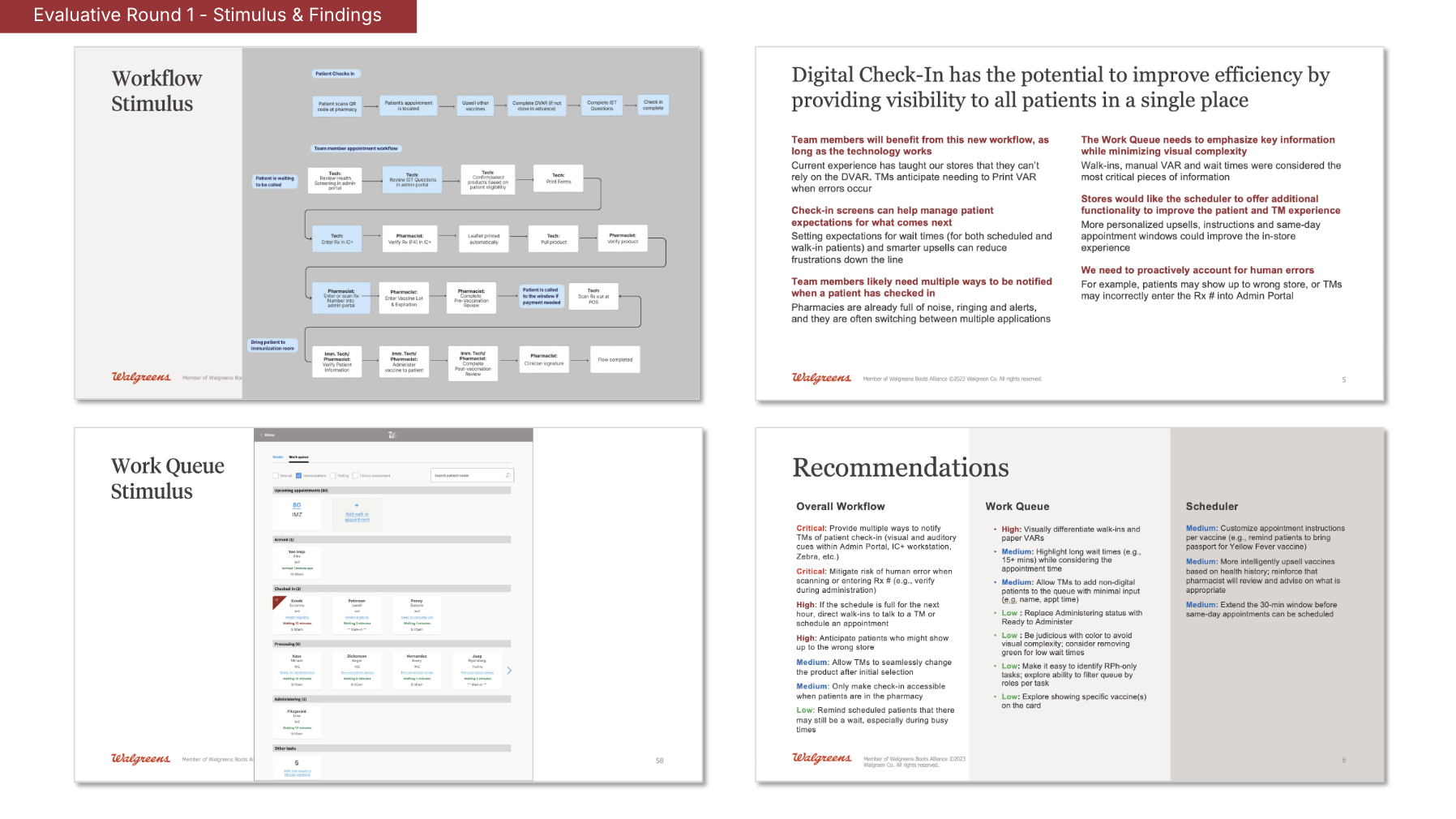
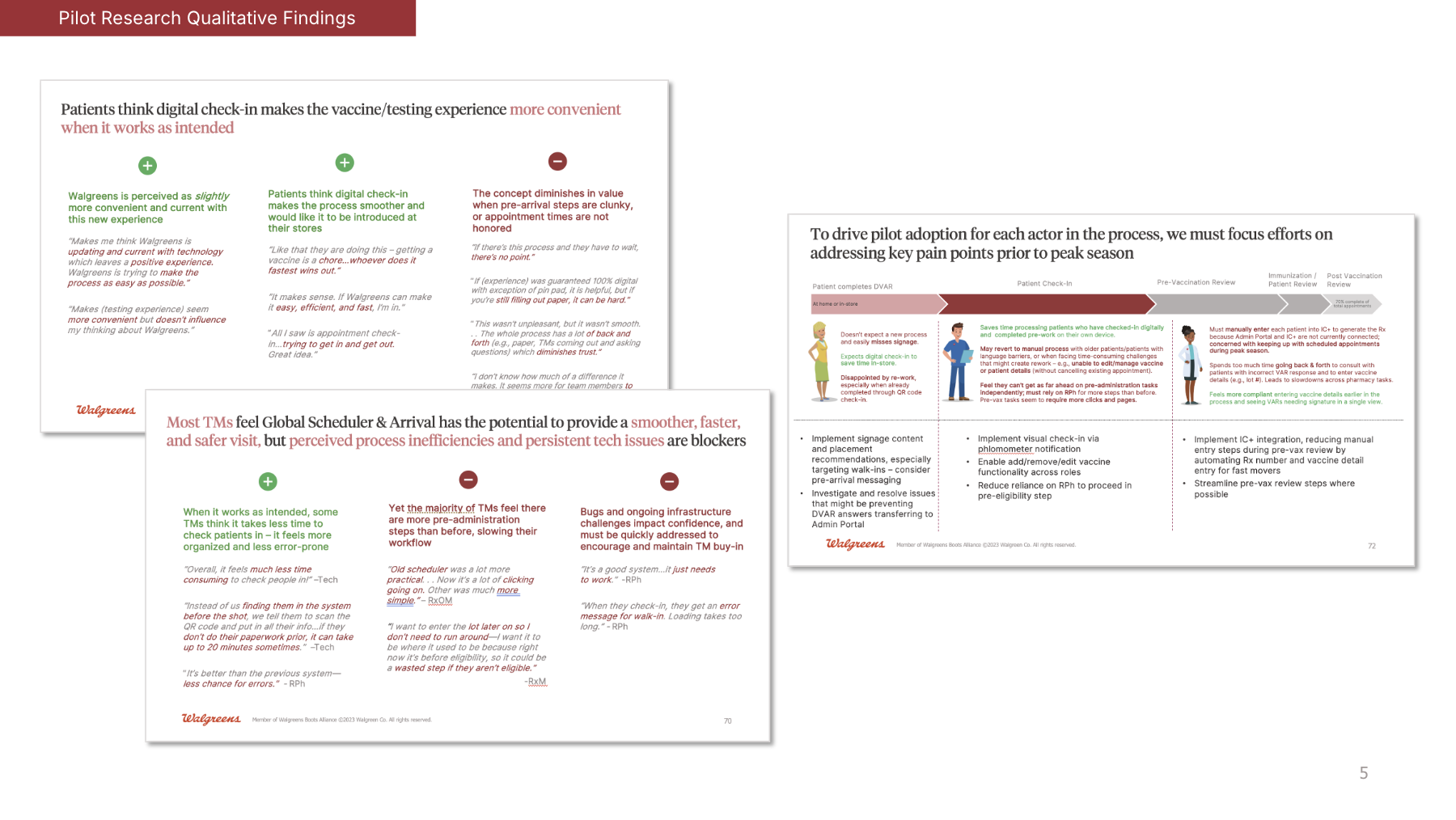
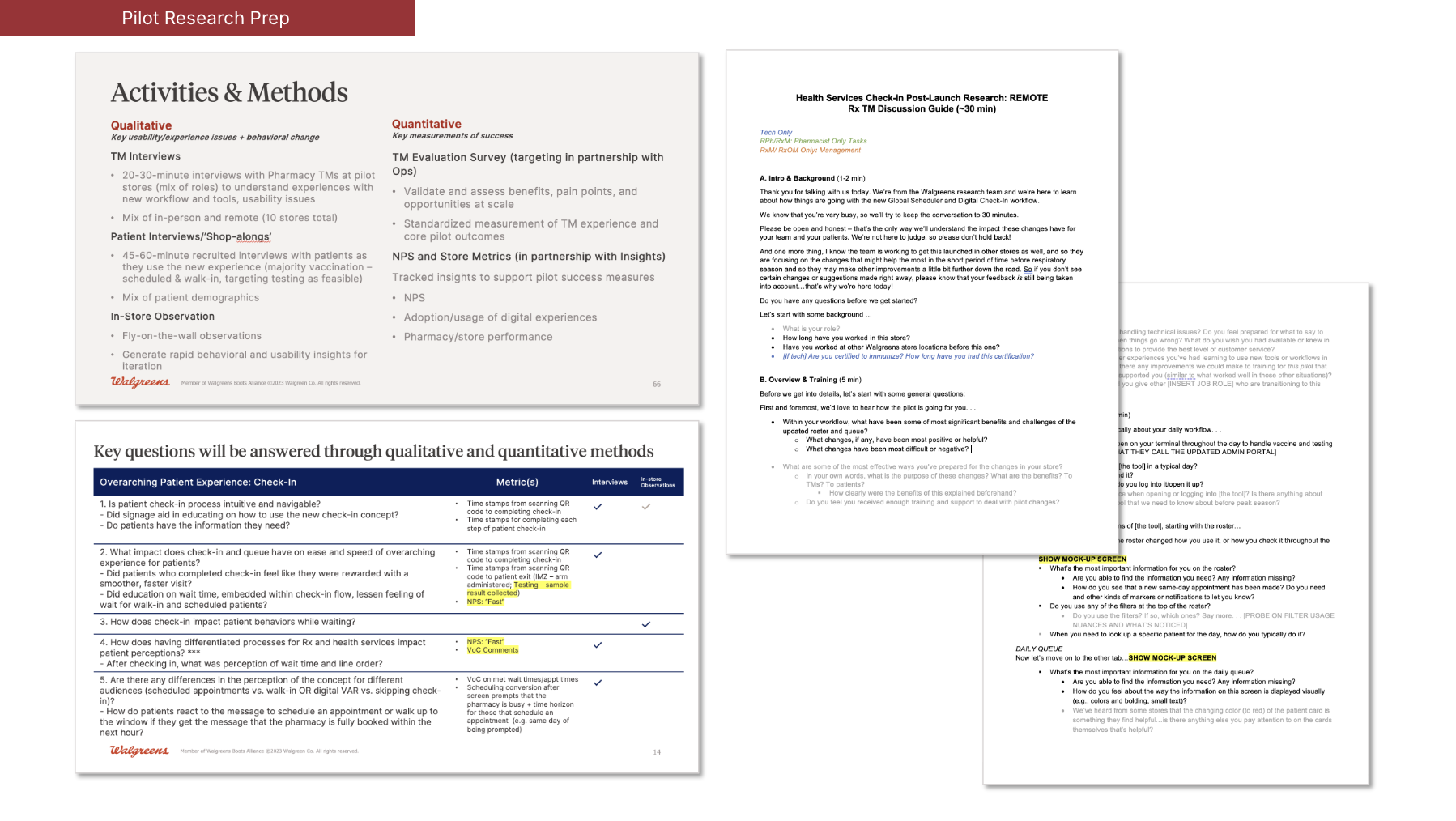
4 rounds of in-person ethnographic and virtual evaluative research was completed to evaluate the current state, 2 rounds of prototypes, and pilot of the concept before scaling nationwide, speaking with 50+ Walgreens’ team members and 19 patients throughout. Taking learnings and open questions from blueprints and prior virtual research sessions, the pilot research plan included key questions and the method for analysis (e.g., interview, observation, metric, etc.). Research was presented to 10+ ops, product, and UX stakeholders after every round, documenting recommendations ranging from critical to low. After qualitative research, I collaborated with the quantitative insights team to create survey questions.
Key Learnings
Bringing Teammates Along the Service Design Journey
The value of a service blueprint is only as good as the understanding it brings to stakeholders, many of which had not had as much familiarity with blueprints before and found them unapproachable to dig into. Walking teams through the blueprint as it evolved would have enabled earlier feedback, stronger shared ownership, and helped UX designers think more constructively about prototypes and the questions they needed to work to answer.
Designing for Real-World Constraints
Although field team members had mostly positive reactions to the new process, its success depended on unresolved systemic constraints, including limited in-store Wi-Fi. Without addressing these foundational issues, adoption risk increased despite strong product vision. Surfacing these infrastructure gaps, and the real-world team member sentiments behind them, might have better supported long-term adoption.